
Blog
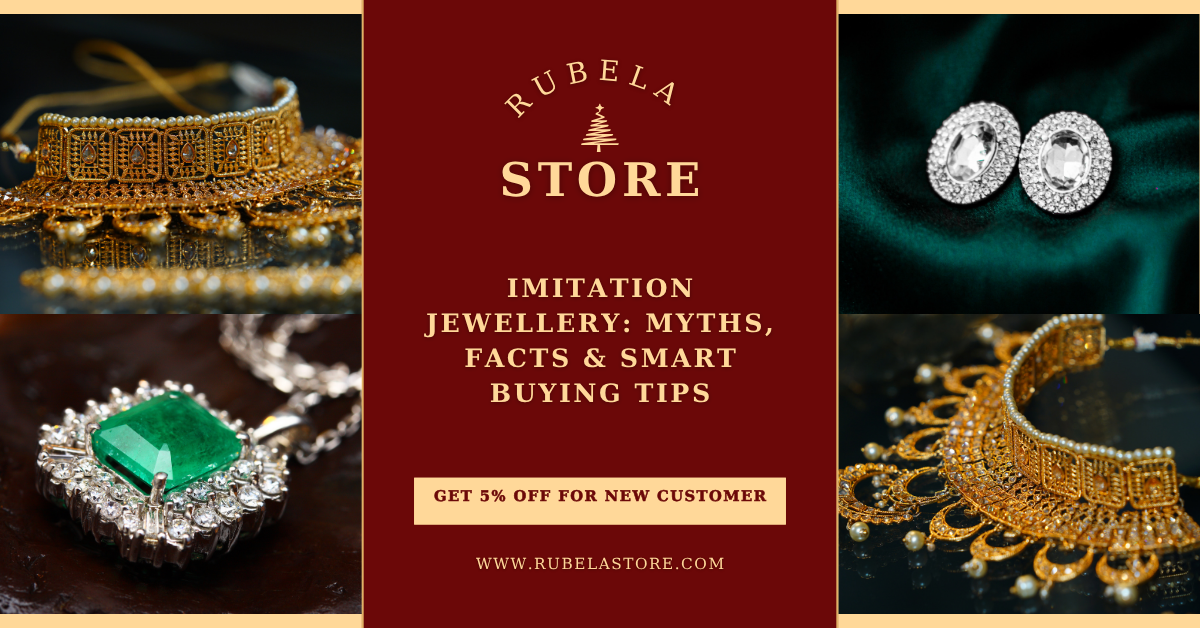
Imitation Jewellery: Myths, Facts & Smart Buying Tips

My aunt refused to touch imitation jewellery for years. Always called it “cheap stuff that turns your neck green,” said it with real conviction too, like she’d personally tested every piece ever sold. Then two years ago, her real jewellery got stuck in the bank locker right before my cousin’s wedding, no time to go retrieve it, so she borrowed a set at the last minute. She’s bought four more since. Her exact line to me afterward was, “I didn’t know it had gotten this good.” That reaction, more than anything, is what made me want to write this.
If you’re carrying some version of the same doubts she had, let’s actually sort through what’s true here and what’s just old thinking that never got updated.
What We’re Actually Talking About
Imitation jewellery covers any piece designed to look like fine jewellery, gold, silver, diamonds, without using those materials underneath. It’s usually built from brass or another base metal, finished with plating or a gold-tone coating, and often paired with stones like cubic zirconia or American Diamond for extra shine.
None of this is new, by the way. People have worn imitation pieces for decades, especially for functions where real gold and diamonds felt too risky to bring along, or just weren’t within reach financially. What’s actually shifted is the quality. The stuff sold today has almost nothing in common with the dull, obviously-fake pieces people remember from twenty years back.
Where the Old Reputation Comes From, and Why It’s Outdated
The “it always looks fake” complaint was fair once, and honestly still holds true for badly made pieces today. But well-made imitation jewellery, with proper plating and careful stone setting, holds up under normal lighting and in photos almost as well as the real thing does. The gap between a good seller and a bad one is huge, and that gap is really the whole reason this myth has stuck around so long.
The green-skin complaint is similar. It happens with certain low-quality base metals reacting badly to sweat or humidity, not with the entire category. Better alloys and proper plating mostly sidestep the problem altogether. A genuinely well-made piece shouldn’t cause this for most people.
Then there’s the idea that imitation jewellery is only for people who can’t afford the real thing, which is honestly just outdated at this point. Plenty of people who could easily buy real gold and diamonds still choose imitation pieces for specific situations, weddings where jewellery takes a beating, functions with a lot of dancing, or just wanting to try a bold design without committing serious money to it.
And the “it won’t last” line only really applies to cheap, rushed pieces. Good imitation jewellery, properly plated and well constructed, can genuinely hold up for years with basic care. It really comes down to who made it, not the category itself.
Why This Has Actually Grown So Much
Cost is a big part of it, plain and simple. Gold and diamond prices have climbed steadily for years, and buying real jewellery for every function just isn’t something most households can keep doing. Imitation jewellery fills that gap without forcing anyone to give up on how they want to look.
There’s a practical side too that people don’t talk about enough. Real jewellery means a locker, insurance thoughts, careful handling every single time you wear it out. Imitation jewellery skips all of that. You wear it, enjoy the event, and don’t spend the whole night worried about losing an earring somewhere on the dance floor.
Design freedom plays into it as well. When the cost is lower, people try bolder colours and chunkier, trend-driven pieces they’d probably think twice about buying in real gold.
How to Shop This Without Getting Burned
This is really where my aunt’s story comes back around, because the set she borrowed happened to be well made, properly plated, stones set securely, and that’s exactly what convinced her. A lower-quality version might have done the opposite.
So a few things actually worth checking. Sellers who mention the plating type specifically, micron gold, rhodium, proper gold polish, usually mean better quality than a vague “gold plated” label with nothing else attached. Buyer-submitted photos tell you more than studio shots do, since studio lighting hides a lot of flaws that show up in regular daylight. If a piece has stones, check that they sit securely and evenly, loose or crooked stones point to rushed manufacturing and tend to fall out sooner than expected. And it helps to actually match the piece to the occasion, a heavy bridal set is wasted on daily wear, and a delicate everyday piece won’t hold up on a big wedding stage.
A little care afterward goes a long way too. Keep pieces away from perfume, lotion, and water where you can, store them separately so they don’t scratch each other, and wipe them down gently after long events. None of it takes much effort, but skipping it is usually why cheap-looking wear shows up sooner than it should.
Where Rubela Store Comes In
This is really the space we’ve focused on at Rubela Store. Our imitation jewellery collection covers American Diamond pieces, gold look designs, and moissanite jewellery, all made with proper plating and careful stone setting instead of the rushed, quick-fade kind flooding a lot of online stores right now. Wedding, festival, or daily wear, there’s a piece built to actually hold up.
Final Thoughts
Imitation jewellery has moved well past its old reputation. It was never really about settling for less, it’s about buying smart for how people actually live and dress today. Most of the doubts trace back to low-quality pieces from years ago, not the category as a whole.
If you’re ready to shop with a clearer idea of what to look for, take a look through Rubela Store’s imitation jewellery collection. Good chance you walk away as surprised as my aunt was.